
Mosaic Virginia

Abortion: the law, the methods, and what to confirm

Abortion law differs from one state to the next, and much of what you find online is out of date or written about somewhere else. Here is where the law stands, how each method works, and what is worth confirming before you decide anything.

See your options, side by side

Read at your own pace. When you are ready, free in-person help in Northern Virginia is here.

If you would rather talk to someone now, call (703) 828-8682.

Free information. No pressure. Mosaic Virginia offers its services at no cost.

Start here

The short version

  • Abortion is legal in Virginia. It is broadly available through the second trimester, and allowed later only when a physician and two consulting physicians certify a risk to the woman's life or health. The law section below names the sources.
  • Virginia does not require a waiting period, and there is no state ultrasound requirement. Nothing in the law is forcing you to decide today.
  • Two things matter before any decision: whether the pregnancy is in the uterus, and how far along you are. An ultrasound answers both.
  • If you are under 18 and not legally emancipated, Virginia requires a parent or guardian's consent or a court's authorization, along with notice to a parent. A judicial bypass lets you ask a court instead.
  • Mosaic Virginia offers its services at no cost, and what you share is kept confidential.
  • Call (703) 828-8682, or text 571-520-8177 any time. Mosaic has four locations across Northern Virginia: Alexandria, Herndon, Fairfax and Lansdowne.

Two things worth confirming first

Before any decision, two questions matter more than the rest, and both are medical rather than personal.

Is the pregnancy in the uterus? Sometimes a pregnancy implants somewhere else, most often in a fallopian tube. That is an ectopic pregnancy. It cannot continue safely, it needs treatment quickly, and an abortion does not treat it. If you have severe pain low down or on one side, heavy bleeding, or you feel faint, go to an emergency room now. An ultrasound is how you find out.

How far along are you? In Virginia there is no early cut-off, because abortion stays available through the second trimester, and the law section sets out what applies after that. It still changes what is medically available, because the medication option is only used early in pregnancy. Dates alone are unreliable, and an ultrasound answers it.

Mosaic Virginia offers pregnancy testing and ultrasound at no cost, at four locations across Northern Virginia. Call (703) 828-8682, or text 571-520-8177 any time.

How abortion works

There are two approaches, and which one applies depends mostly on how far along you are.

Medication abortion uses two drugs taken a day or two apart, early in pregnancy. The first stops the pregnancy from continuing, the second causes the uterus to empty, with cramping and bleeding usually heavier than a period. It is legal in Virginia, advanced practice clinicians may dispense it, and state law does not require the prescribing clinician to be physically present.

An in-clinic procedure is done by medical staff in a single visit, removing the pregnancy from the uterus with gentle suction. Early in pregnancy it takes a few minutes. Later in pregnancy the in-clinic method is different, and a provider will explain what applies to you.

Both carry a chance of complications that need follow-up care. The table below shows how often each of those outcomes actually happens, with the source named.

Virginia sets no waiting period and no state counseling script, so the pace of this is yours. What the law does require is the ordinary informed consent between you and whoever provides your care.

Abortion laws in Virginia

This is the law in Virginia, where this center is. If you live somewhere else, your own state's rules are the ones that apply to you.

Virginia abortion law, taken from the sources listed below.

  • The criminal prohibition: Section 18.2-71 is titled Producing abortion or miscarriage, etc.; penalty. Where the statute uses its own term for what is developing in a pregnancy, this page says embryo or fetus. It says that except as provided in other sections of this article, a person who gives a woman, or causes her to take, any drug or other thing, or who uses means, with intent to destroy the embryo or fetus she is carrying or to produce an abortion or miscarriage, and who thereby destroys that embryo or fetus or produces the abortion or miscarriage, is guilty of a Class 4 felony. The section applies except as provided in other sections of the same article.
Show all 13 details
  • First trimester: Section 18.2-72 is titled When abortion lawful during first trimester of pregnancy. It says that despite anything in section 18.2-71, it is lawful for two kinds of provider to terminate or attempt to terminate a human pregnancy, or to aid or assist in ending one, by performing an abortion or causing a miscarriage on any woman during the first trimester of pregnancy. The two are a physician licensed by the Board of Medicine to practice medicine and surgery, and a person jointly licensed by the Boards of Medicine and Nursing as an advanced practice registered nurse who is acting within that person's scope of practice.
  • Second trimester: Section 18.2-73 is titled When abortion lawful during second trimester of pregnancy. It says that notwithstanding any of the provisions of section 18.2-71, and in addition to the provisions of section 18.2-72, it is lawful for any physician licensed by the Board of Medicine to practice medicine and surgery to terminate or attempt to terminate a human pregnancy, or to aid or assist in the termination of a human pregnancy, by performing an abortion or causing a miscarriage on any woman during the second trimester of pregnancy and prior to the third trimester of pregnancy, provided the procedure is performed in a hospital licensed by the State Department of Health or operated by the Department of Behavioral Health and Developmental Services.
  • A 2019 federal court ruling on where second trimester abortions are done: A federal court opinion in case 3:18-cv-00428, filed 09/30/19, says the necessity that all second trimester procedures, including aspiration and similar non-surgical procedures, must be performed in a hospital setting is unsupported by the evidence. It finds that the requirement that non-surgical second trimester abortion procedures, up to the point of viability, be performed in outpatient surgical hospitals imposes an undue burden, and it says enforcement of those provisions, in their current form, will be enjoined. It says surgical abortion procedures during the second trimester should be performed in a hospital setting, and that aspiration and medication abortions do not involve surgery. Whether that ruling still applies today is a legal question this page does not answer.
  • After the second trimester: Section 18.2-74 is titled When abortion or termination of pregnancy lawful after second trimester of pregnancy. It says that despite anything in section 18.2-71, and in addition to sections 18.2-72 and 18.2-73, it is lawful for any physician licensed by the Board of Medicine to practice medicine and surgery to terminate or attempt to terminate a human pregnancy, or to aid or assist in ending one, by performing an abortion or causing a miscarriage on any woman in a stage of pregnancy after the second trimester, provided the following conditions are met. First, the operation is performed in a hospital licensed by the Virginia State Department of Health or operated by the Department of Behavioral Health and Developmental Services. Second, the physician and two consulting physicians certify, and so enter in the woman's hospital record, that in their medical opinion, based upon their best clinical judgment, the continuation of the pregnancy is likely to result in the death of the woman or substantially and irremediably impair her mental or physical health. Third, measures for life support for the product of the abortion or miscarriage must be available and utilized if there is any clearly visible evidence of viability.
  • When it is necessary to save the woman's life: Section 18.2-74.1 is titled Abortion, etc., when necessary to save life of woman. It says that in the event it is necessary for a licensed physician to terminate a human pregnancy, or to assist in ending one, by performing an abortion or causing a miscarriage on any woman in order to save her life, in the opinion of the physician who performs the abortion or causes the miscarriage, then sections 18.2-71, 18.2-73 and 18.2-74 do not apply.
  • Informed written consent: Section 18.2-76 is titled Informed written consent required. It says that before performing any abortion, inducing any miscarriage, or terminating a pregnancy as provided in section 18.2-72, 18.2-73 or 18.2-74, the physician shall obtain the informed written consent of the pregnant woman. Where the care is provided under section 18.2-72, either the physician or the advanced practice registered nurse authorized by clause (ii) of that section may be the one who obtains it. The consent this section calls for is written. The section then deals separately with a woman who has been adjudicated incapacitated by a court of competent jurisdiction, or who the physician or nurse knows or has good reason to believe is incapacitated as adjudicated by such a court. In that situation the abortion or termination may be performed only after permission is given in writing by a parent, guardian, committee, or other person standing in loco parentis to the woman.
  • Waiting period: Two documents were fetched from law.lis.virginia.gov and searched in full for this page. The first is at Title 18.2, Chapter 4, Article 9. The second is at Title 16.1, Chapter 11, Section 16.1-241. The phrase waiting period does not appear in either of them. That is a search of those two documents and not of every Virginia law, and the absence of the phrase is not by itself proof that no timing rule exists under different wording.
  • Ultrasound: Two documents were fetched from law.lis.virginia.gov and searched in full for this page. The first is at Title 18.2, Chapter 4, Article 9. The second is at Title 16.1, Chapter 11, Section 16.1-241. The word ultrasound does not appear in either of them. That is a search of those two documents and not of every Virginia law, and the absence of the word is not by itself proof that no rule exists under different wording.
  • If you are under 18: A physician shall not knowingly perform an abortion upon an unemancipated minor unless consent has been obtained, or the minor delivers to the physician a court order entered pursuant to this section and the physician or his agent provides such notice as the order may require. Two situations are set out in which neither consent nor judicial authorization nor notice is required. One is where the minor declares that she is abused or neglected and the attending physician has reason to suspect that she may be an abused or neglected child as defined in section 63.2-100, and reports the suspected abuse or neglect in accordance with section 63.2-1509. The other is a medical emergency, in which case the attending physician shall certify the facts justifying the exception in the minor's medical record.
  • Asking a judge instead: W. Petitions filed by a juvenile seeking judicial authorization for a physician to perform an abortion if a minor elects not to seek consent of an authorized person. After a hearing, a judge shall issue an order authorizing a physician to perform an abortion, without the consent of any authorized person, if he finds that (i) the minor is mature enough and well enough informed to make her abortion decision, in consultation with her physician, independent of the wishes of any authorized person, or (ii) the minor is not mature enough or well enough informed to make such decision, but the desired abortion would be in her best interest. If the judge authorizes an abortion based on the best interests of the minor, such order shall expressly state that such authorization is subject to the physician or his agent giving notice of intent to perform the abortion; however, no such notice shall be required if the judge finds that such notice would not be in the best interest of the minor. In determining whether notice is in the best interest of the minor, the judge shall consider the totality of the circumstances; however, he shall find that notice is not in the best interest of the minor if he finds that (a) one or more authorized persons with whom the minor regularly and customarily resides is abusive or neglectful and (b) every other authorized person, if any, is either abusive or neglectful or has refused to accept responsibility as parent, legal guardian, custodian, or person standing in loco parentis. The minor may participate in the court proceedings on her own behalf, and the court may appoint a guardian ad litem for the minor. The court shall advise the minor that she has a right to counsel and shall, upon her request, appoint counsel for her. Notwithstanding any other provision of law, the provisions of this subsection shall govern proceedings relating to consent for a minor's abortion. Court proceedings under this subsection and records of such proceedings shall be confidential. Such proceedings shall be given precedence over other pending matters so that the court may reach a decision promptly and without delay in order to serve the best interests of the minor. Court proceedings under this subsection shall be heard and decided as soon as practicable but in no event later than four days after the petition is filed. An expedited confidential appeal to the circuit court shall be available to any minor for whom the court denies an order authorizing an abortion without consent or without notice. Any such appeal shall be heard and decided no later than five days after the appeal is filed. The time periods required by this subsection shall be subject to subsection B of § 1-210 . An order authorizing an abortion without consent or without notice shall not be subject to appeal. No filing fees shall be required of the minor at trial or upon appeal. If either the original court or the circuit court fails to act within the time periods required by this subsection, the court before which the proceeding is pending shall immediately authorize a physician to perform the abortion without consent of or notice to an authorized person. Nothing contained in this subsection shall be construed to authorize a physician to perform an abortion on a minor in circumstances or in a manner that would be unlawful if performed on an adult woman.
  • A provider can decline: § 18.2-75 . Conscience clause. Nothing in §§ 18.2-72 , 18.2-73 or § 18.2-74 shall require a hospital or other medical facility or physician to admit any patient under the provisions hereof for the purpose of performing an abortion. In addition, any person who shall state in writing an objection to any abortion or all abortions on personal, ethical, moral or religious grounds shall not be required to participate in procedures which will result in such abortion, and the refusal of such person, hospital or other medical facility to participate therein shall not form the basis of any claim for damages on account of such refusal or for any disciplinary or recriminatory action against such person, nor shall any such person be denied employment because of such objection or refusal. The written objection shall remain in effect until such person shall revoke it in writing or terminate his association with the facility with which it is filed.
  • Who can consent for a minor, and what notice means: The subsection gives definitions that apply for its purposes. An authorized person means a parent or duly appointed legal guardian or custodian of the minor, or a person standing in loco parentis, including a grandparent or adult sibling with whom the minor regularly and customarily resides and who has care and control of the minor. Authorization means the minor has delivered to the physician a notarized, written statement signed by an authorized person saying that the person knows of the minor's intent to have an abortion and consents to the abortion being performed on the minor. A person who knows he is not an authorized person and who knowingly and willfully signs an authorization statement consenting to an abortion for a minor is guilty of a Class 3 misdemeanor. Consent means either that the physician has given notice of intent to perform the abortion and has received authorization from an authorized person, or that at least one authorized person is present with the minor seeking the abortion and provides written authorization to the physician, witnessed by the physician or an agent. In either case the written authorization is incorporated into the minor's medical record and kept as part of it. Medical emergency means any condition which, on the basis of the physician's good faith clinical judgment, so complicates the medical condition of the pregnant minor as to necessitate the immediate abortion of her pregnancy to avert her death, or for which a delay will create a serious risk of substantial and irreversible impairment of a major bodily function. Notice of intent to perform the abortion means one of two things: the physician or his agent has given actual notice of the intention to perform the abortion to an authorized person, either in person or by telephone, at least 24 hours before the abortion; or the physician or his agent, after a reasonable effort to notify an authorized person, has mailed notice to an authorized person by certified mail, addressed to that person's usual place of abode, with return receipt requested, at least 72 hours before the abortion.

Sources: [1][2][3][4][5][6][7][8][9][10][11][12] · Last verified 2026-10-19.

If you are under 18

Virginia treats this differently. Before an unemancipated minor has an abortion, state law requires the consent of a parent or guardian, or authorization from a court, along with notice to a parent.

If going to a parent is not something you can do, that is what the judicial bypass is for: you ask a court for authorization instead. The law section above names the sources and the dates they were checked.

This is general information and not legal advice. A licensed provider or an attorney can tell you how it applies to you.

A fully informed decision

Your options, side by side

Each option below sets out what it involves and what people weigh before choosing it. Mosaic Virginia does not perform or refer for abortion.

Abortion

What this option involves

  • Ends the pregnancy
  • The medication option works early in pregnancy and feels more private to some people
  • The in-clinic option is a single visit handled by medical staff

What to consider

  • Cramping and bleeding are expected, and can be heavy
  • A wide range of feelings afterward is normal
  • How far along you are decides which method applies, which is why confirming it first matters

How often this happens

Needs a follow-up procedure to complete a medication abortion
about 20 to 50 out of 1,000 in early pregnancy · ACOG, reviewed 2026-06-25
Get care right away if: A follow-up visit is how this is found. If the pregnancy has not fully passed, a short procedure completes it.
Pregnancy continues after the medication
about 10 to 30 out of 1,000 in early pregnancy · FDA, reviewed 2026-06-25
Get care right away if: A follow-up check is the only way to know. It is the reason the follow-up matters even if you feel fine.
Serious complication, either method
fewer than 10 out of 1,000 in early pregnancy · ACOG, reviewed 2026-06-25
Get care right away if: Heavy bleeding, fever, or severe pain are reasons to seek medical care promptly, whichever method you have.

Parenting

What this option involves

  • You raise your child, with support around you
  • Talking it through with someone can make the next steps clearer
  • There is time to plan, and the practical questions can be worked through step by step

What to consider

  • Carrying a pregnancy to term has its own medical course, including prenatal care, delivery and recovery
  • It changes your finances, your schooling or work, and your housing
  • Support from the people around you matters a great deal
  • It helps to know what local help you qualify for before deciding

Adoption

What this option involves

  • You carry the pregnancy and help choose the family
  • Arrangements range from open, with ongoing contact, to closed

What to consider

  • Carrying a pregnancy to term has its own medical course, including prenatal care, delivery and recovery
  • The emotional weight is real, both during and after
  • Once you sign the consent after birth it is usually final, and the exact point differs by state, so ask before you sign
  • Talking with someone who has no stake in your decision helps

Where to find us

Mosaic Virginia has 4 locations. Every one offers the same services, so choose whichever is easiest for you to reach.

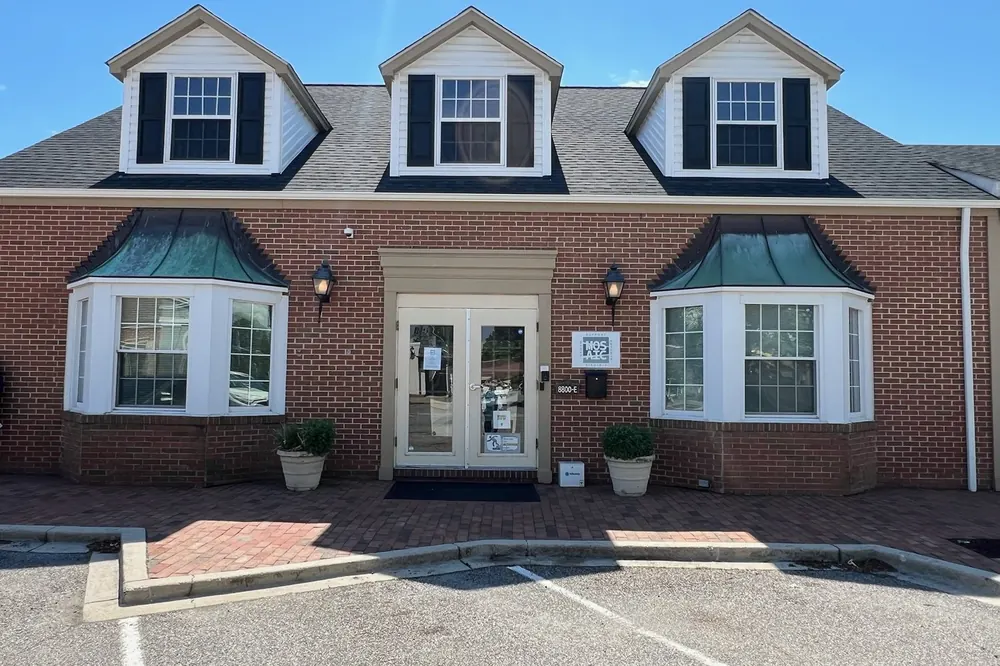
  • The Mosaic Virginia office in Alexandria, 8800-E Pear Tree Village Court

    Alexandria

    8800-E Pear Tree Village Ct., Alexandria

    Hours: Mon 11-6, Tues and Wed 9-5:30, Thurs 10:30-7

  • The Suite 115 entrance of the Mosaic Virginia office in Herndon

    Herndon

    505 Huntmar Park Dr. #115, Herndon

    Hours: Mon 10:30-7 and Tues-Thurs 9-5:30

  • The front door of the Mosaic Virginia office in Fairfax, with the 81-B suite plaque

    Fairfax

    3919 Blenheim Blvd. Suite 81-B, Fairfax

    Hours: Mon-Wed 9-5:30 and Thurs 10-7

  • The entrance of Mosaic Virginia in Lansdowne, under the 19415 awning

    Lansdowne

    19415 Deerfield Ave #109, Lansdowne

    Hours: Mon-Wed 9-5:30 and Thurs 10:30-7

One number reaches all of them: (703) 828-8682

What people say about us

4.8from 280 Google reviews

Across all 4 locations: Alexandria 4.9, Fairfax 4.8, Herndon 4.8, Lansdowne 4.6

  • ★★★★★Lansdowne

    I had a wonderful experience at Mosaic. From the moment I walked in, the environment was warm, welcoming, and comfortable. The medical services I received were helpful, informative, and gave me the information I needed to make informed decisions. The client advocate and nurse were compassionate, professional, and made me feel comfortable sharing my needs and concerns without feeling judged. What I appreciate most about Mosaic is the genuine support they provide. They truly care about the people they serve, and I always felt heard, respected, and cared for. I highly recommend Mosaic to anyone looking for a supportive and compassionate place.

    Adrianna Ruffin · July 2026 · Google

  • ★★★★★Alexandria

    Really fantastic place. Cindy was so sweet and very helpful. Would highly recommend!

    Dani Finley-Reeves · June 2026 · Google

  • ★★★★★Fairfax

    This clinic and the entire staff are absolutely amazing! They are incredibly helpful and go above and beyond to give you the absolute best service. I really appreciate everything they did; it was a huge help to me. Highly recommend!

    melat sisay · June 2026 · Google

  • ★★★★★Lansdowne

    Mosiac is a safe haven for women, mothers, and men. I adore my mentor; she’s like my free therapist. I can confide in her about anything, and she listens attentively. If you’re seeking a supportive community with empathetic and compassionate individuals, Mosaic is the place for you.

    Joy Uko · May 2026 · Google

  • ★★★★★Fairfax

    This clinic was amazing! The staff was very sweet and helpful from the two sweet receptionist at the front desk to my advocate Lesley to the nurse Michelle they provided me and my husband with a lot of resources and made us even more excited to begin this journey. Would definitely recommend this clinic to anyone starting their pregnancy journey!

    Courtney · April 2026 · Google

  • ★★★★★Fairfax

    A place where they support you, teach you, and fill you with hope during pregnancy. Thank you, Mosaic Virginia.

    Michel Hernandez · March 2026 · Google

Reviews are collected from Google and shown as written.

Who we are

Mosaic Virginia

Mosaic Virginia in Northern Virginia

Mosaic Virginia provides expert, compassionate care in a safe and supportive environment to women facing unplanned pregnancies.

8800-E Pear Tree Village Ct., Alexandria, VA

  • Four locations in Northern Virginia. See hours below.

(703) 828-8682

All information shared is kept completely confidential.

Sources and medical review

Sources

Common questions

Is abortion legal in Virginia?
Yes. It is broadly available through the second trimester. Later than that, Virginia allows it only when a physician and two consulting physicians certify that continuing the pregnancy is likely to cause death or substantial and lasting harm to the woman's health. The law section on this page names the sources and the dates they were checked.
Do I have to wait, or have an ultrasound first?
Virginia does not require a waiting period before an abortion, and there is no state ultrasound requirement. An ultrasound is still worth having for your own sake, because it shows whether the pregnancy is in the uterus and how far along you are.
I am under 18. What does Virginia require?
The consent of a parent or guardian, or authorization from a court, along with notice to a parent. A judicial bypass lets you ask a court instead of a parent. The law section on this page names the sources.
What does it cost at Mosaic?
Mosaic Virginia offers its services at no cost. Pregnancy testing, ultrasound and STI testing are among them.
Can I come if I am considering abortion?
Yes. Mosaic provides services without discrimination to people of any age, race, income or nationality, and abortion information and pregnancy options are two of the things it offers. Confirming that the pregnancy is in the uterus and how far along you are is useful whatever you decide.
Where are you, and how do I reach you?
Mosaic has four locations across Northern Virginia: Alexandria, Herndon, Fairfax and Lansdowne. Call (703) 828-8682, or text 571-520-8177 any time.

Find free, in-person help in Northern Virginia

Mosaic Virginia offers free pregnancy testing and a private, no-pressure conversation in Northern Virginia, VA. Talk with someone when you are ready.

See free help in Northern Virginia